
Music can be a powerful tool in combating symptoms associated with dementia. Studies have shown that music can reduce agitation and improve behavioral issues that are commonly associated with Alzheimer’s Disease. Even in the late stages of Alzheimer’s, a person can still find joy in music. They may be able to tap a beat or sing lyrics to a song from childhood. Music is a way to connect, even when verbal communication is no longer possible.
Rush Alzheimer’s Disease Center’s Without Warning, a support group for those living with younger onset Alzheimer’s, has also seen the benefits of using music therapy and incorporates it into their monthly dementia group meetings. Nancy Swanson, a board-certified music therapist who works with the group, said that: “the use of familiar music, along with the strong therapeutic relationship with the music therapist, provides participants in the Without Warning group a place to express themselves when words alone are becoming challenging.”
“If a person with dementia is feeling confused and anxious, the music therapist assesses the person, formulates a session plan based on the presenting clinical needs, and then uses music experiences to address these needs,” Swanson said. “A music therapist may begin with playing and singing familiar songs to help establish connection and engagement, which then helps the individual focus on the music and eventually relax and become actively engaged in the music with the music therapist.”
Though many programs and groups offer music-related activities, it may also be helpful to introduce this into your weekly care routine. The following resources and recommendations come from Swanson, as well as the Alzheimer’s Association’s section on music and art.
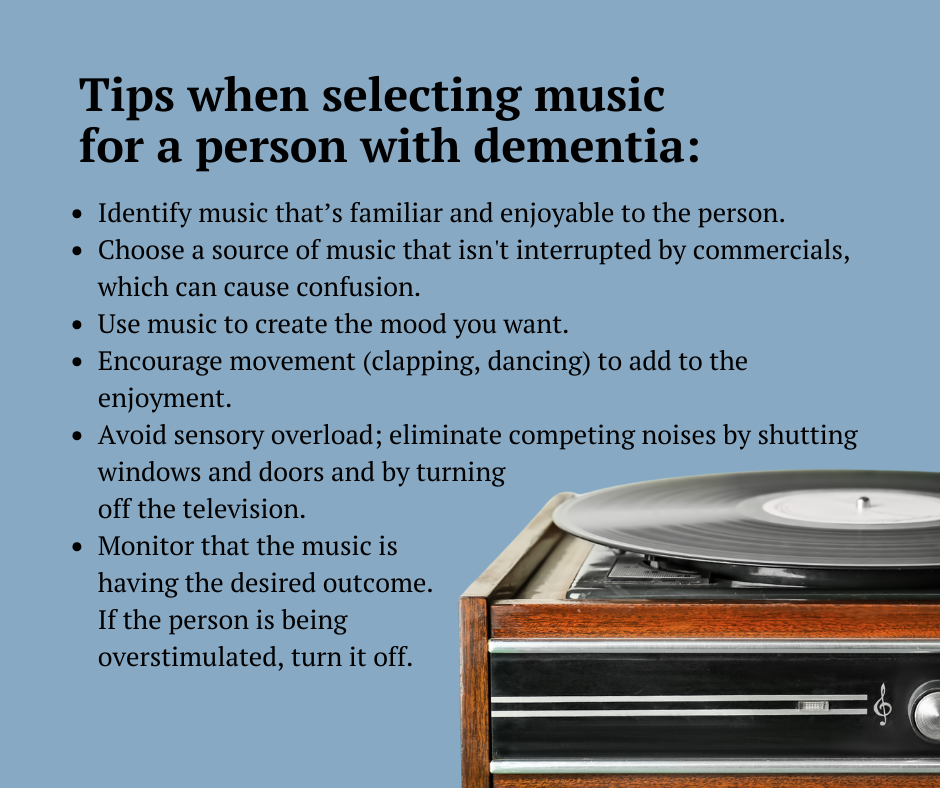
Tips when selecting music for a person with dementia:
- Identify music that’s familiar and enjoyable to the person. If possible, let the person choose the music, or start by researching what music was popular during their young adult years.
- Choose a source of music that isn’t interrupted by commercials, which can cause confusion.
- Use music to create the mood you want. For example, a tranquil piece of music can help create a calm environment, while a faster paced song from someone’s childhood may boost spirit and evoke happy memories.
- Encourage movement (clapping, dancing) to add to the enjoyment.
- Avoid sensory overload; eliminate competing noises by shutting windows and doors and by turning off the television. Make sure the volume of the music is not too loud.
- Monitor that the music is having the desired outcome. If the person is being overstimulated, turn it off. Music is effective, but it can also have negative consequences if not monitored.
If you are looking for music therapy opportunities outside of the home, look no further than “Memory Cafés,” designated places providing activities and education for people with Alzheimer’s or related dementias, as well as their caregivers (in December, some cafés host events featuring holiday music!). Check and see if there’s a Memory Café in your community here.
Music can enrich the lives of people with Alzheimer’s disease, allowing for self-expression and engagement, even after dementia has progressed. Learn more about music therapy or find a music therapist in your area with Illinois Association for Music Therapy or American Music Therapy Association.
###
Last Updated on December 20, 2023


